3 min read
Our selection of Italian roasters isn't made by coincidence. Here's what each certification actually guarantees — and why it mattered to us.
Our coffee selection isn't put together at random. We know it inside out, and we drink our own coffees ourselves.
We took our time to find what we believe is exceptional Italian coffee. Our roasters do exactly the same on their end: they search for the best beans, the most precise roast, the strictest respect for their craft. Finding these roasters took time — months on the road across Italy, countless encounters, just as many coffees tasted. But it paid off: the four houses we work with today share the same standards we do.
The labels you see on our product pages aren't there to look good. They're proof, issued by independent third-party organizations, confirming what we saw firsthand: these roasters care about the quality of the bean, the environment it grows in, and follow a clear philosophy behind every blend. Here's what each of these labels actually means.
Istituto Espresso Italiano
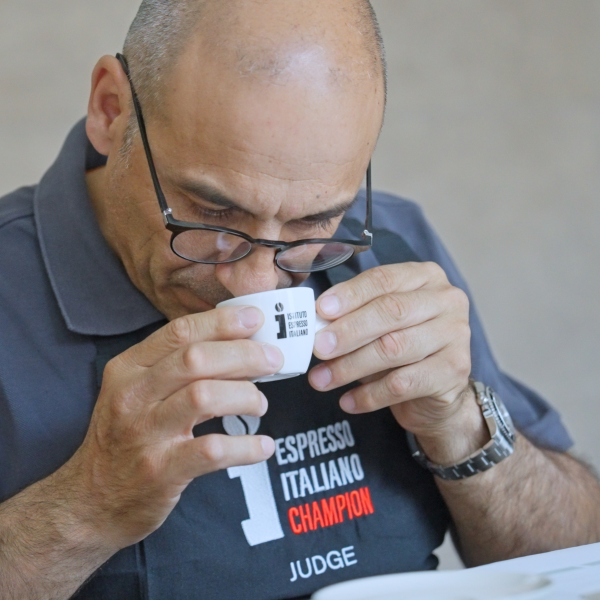
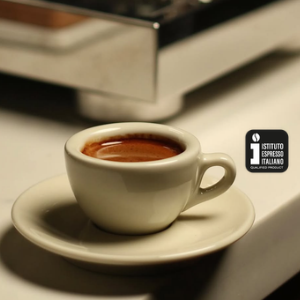
Founded in 1998, the Istituto Espresso Italiano (IEI) exists to preserve the standards of authentic Italian espresso, at a time when the term "Italian espresso" was being used loosely, everywhere, with little rigor. Its certification sets precise sensory and technical criteria: certified blend, controlled extraction, even and lasting crema, aromatic balance in the cup. When a coffee carries this label, it means it's been assessed against a protocol recognized across the industry — not just described as "authentic" on the packaging.
International Institute of Coffee Tasters (IIAC)
The IIAC has existed since 1993 and stands as a global reference in coffee tasting. Its panels, trained and certified under a strict scientific protocol, evaluate coffees blind against precise sensory criteria — aroma, acidity, body, finish, any defects. It's this kind of evaluation, independent of the roaster itself, that makes it possible to tell an exceptional coffee from a merely decent one, objectively.
Organic Coffee
European organic certification imposes strict rules across the entire supply chain: no synthetic chemical pesticides, no artificial fertilizers, farming practices that preserve soil fertility over the long term. For coffee — often grown on steep slopes, at altitude, in fragile ecosystems — this has a direct impact on local biodiversity. Organic-certified coffee guarantees verified traceability, checked by independent bodies, from the field all the way to the roastery.
The difference comes through in the cup too. Our organic coffees are highly aromatic, 100% arabica, so the natural character of high-quality beans really shows.
Rainforest Alliance
This label goes beyond environmental concerns alone. Rainforest Alliance certification requires respect for biodiversity in growing regions, fair working conditions for producers and their teams, and responsible management of natural resources — water, soil, surrounding forest. It's a certification that looks at the whole chain, not just the bean that ends up in your cup.
International Women's Coffee Alliance (IWCA)
The IWCA is a global organization working for equity and empowerment for women across the coffee industry, from production through to roasting. In an industry where women make up a large share of the agricultural workforce yet remain significantly underrepresented in leadership roles, this kind of commitment matters. A roaster that partners with this initiative shows it's looking beyond bean quality alone.
Espresso Italiano di Qualità
This certification is awarded by the Gruppo Italiano Torrefattori Caffè, based in Trieste — a city historically central to the Italian coffee trade. It distinguishes coffees that meet the highest quality standards, based on strict criteria and testing carried out by an accredited laboratory. It's renewed every two years, meaning a roaster can't rest on a certification earned once: they have to keep proving, year after year, that they still meet the bar.
What these labels guarantee — and what they don't
Do these labels mean you'll love every coffee we sell? No — taste is personal, and that's exactly how it should be. But they show something important: that the quality of our coffees isn't just a marketing promise, and that our artisan roasters' commitment — to quality and to the environment alike — is verified by independent third parties. It's exactly this kind of rigor that made us want to work with them.